What is a TIA? Tenant Improvement Allowance
A Tenant Improvement Allowance is money a landlord contributes toward improving your leased space — but it’s a contribution, not a construction budget. Here’s how TIAs are calculated, what they cover, and how the money actually gets paid.
The Core Definition
A Tenant Improvement Allowance (TIA) is money a commercial property owner or landlord agrees to contribute toward improvements made to a leased space for a tenant. The allowance represents a landlord’s financial contribution rather than complete construction funding — tenants often need to cover costs exceeding the allowance. TIAs are commonly expressed per square foot: 10,000 rentable SF × $50/SF = $500,000 TIA. No universal amount applies to every commercial lease — negotiated amounts vary based on lease length, tenant creditworthiness, existing space condition, building class, local market conditions, and landlord investment strategy.
What a TIA Typically Covers — and What It Doesn't
Eligible expenses, common exclusions, and how the money actually gets paid.
Interior Construction
Demolition, framing, drywall, ceilings, flooring, painting and doors are typically eligible TIA expenses.
Electrical & Lighting
Electrical modifications, lighting upgrades and panel work are commonly covered by the allowance.
HVAC & Plumbing
HVAC adjustments, plumbing, restroom improvements and fire sprinkler modifications are typical eligible items.
Soft Costs
Architecture, engineering, permitting and project management may be eligible depending on lease language.
Furniture Not Included
Office furniture, computers and portable equipment are removable business assets and typically ineligible.
Moving Costs Not Included
Moving expenses, employee relocation and most signage usually fall outside TIA coverage.
Reimbursement Structure
Some landlords reimburse after completion, requiring invoices, lien releases and a certificate of occupancy.
Draws & Direct Payment
Other leases allow progress draws, direct contractor payment, or milestone-based funding instead.
How a TIA Is Calculated
The basic formula multiplies rentable square footage by a negotiated dollar amount per square foot — for example, 10,000 SF at $50/SF produces a $500,000 allowance. But that number is negotiated, not fixed: lease length, tenant creditworthiness, existing condition, building class, market conditions, rent structure and the landlord’s investment strategy all move the number. The same building can offer very different allowances to two different tenants.
TIA Is Not the Same as Your Construction Budget
Having a $300,000 allowance does not mean you receive $300,000 before construction starts. TIA + Tenant Contribution + Other Approved Funding = Available Project Budget — and if the required work costs more than the allowance, the difference is the tenant’s responsibility. Funding is not the same as cash flow: a business can have a substantial TIA and still need significant working capital to carry construction before reimbursement arrives.

Before You Sign, Know the Draw Requirements
Ask for the exact reimbursement process before signing.
Who initially pays the contractor? Are progress draws allowed? Does reimbursement occur only at completion? Are lien releases required? Is a certificate of occupancy necessary? Which costs qualify, when does the allowance expire, and can soft costs be reimbursed? The single biggest TIA mistake is treating the allowance and the construction budget as though they are the same number. They rarely are.
Getting Real Pricing Before You Negotiate
A TIA negotiated before realistic construction pricing exists is one of the most common sources of budget shock in commercial leasing. Get preliminary construction pricing early — before the lease is signed, not after — so the allowance and the probable project cost can be compared side by side.
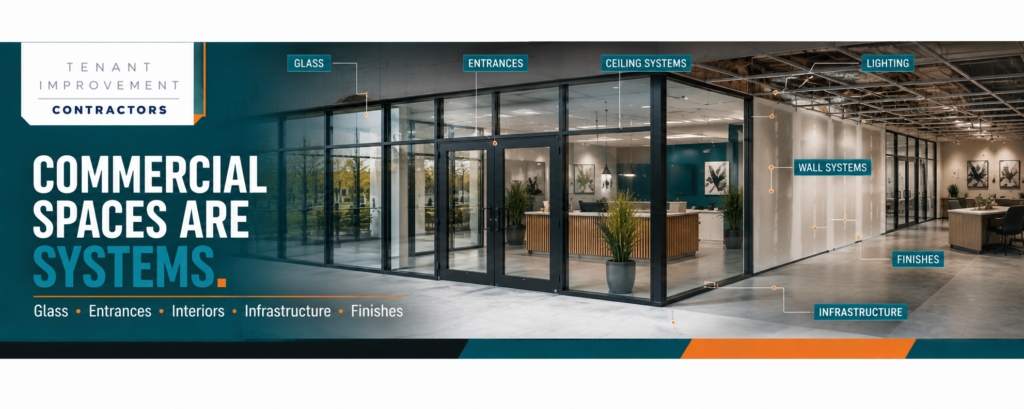
One Contractor, From TIA Planning to Final Punch List
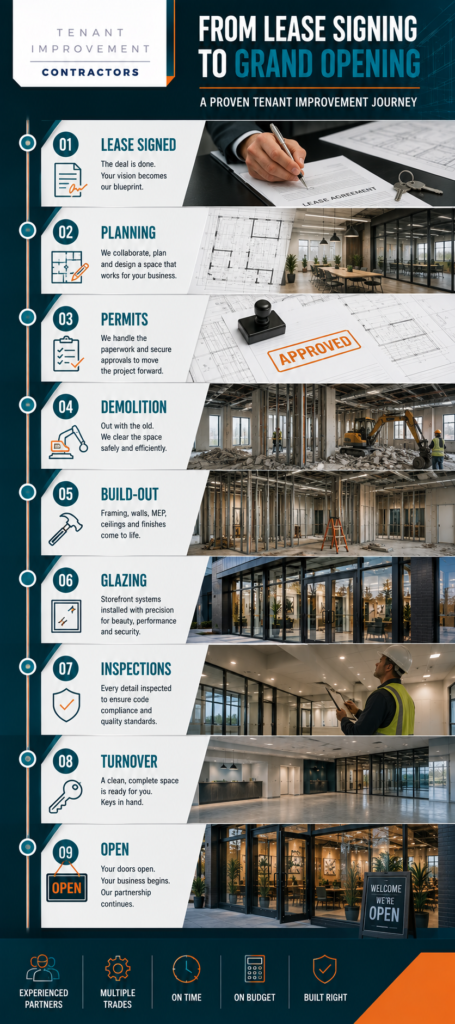
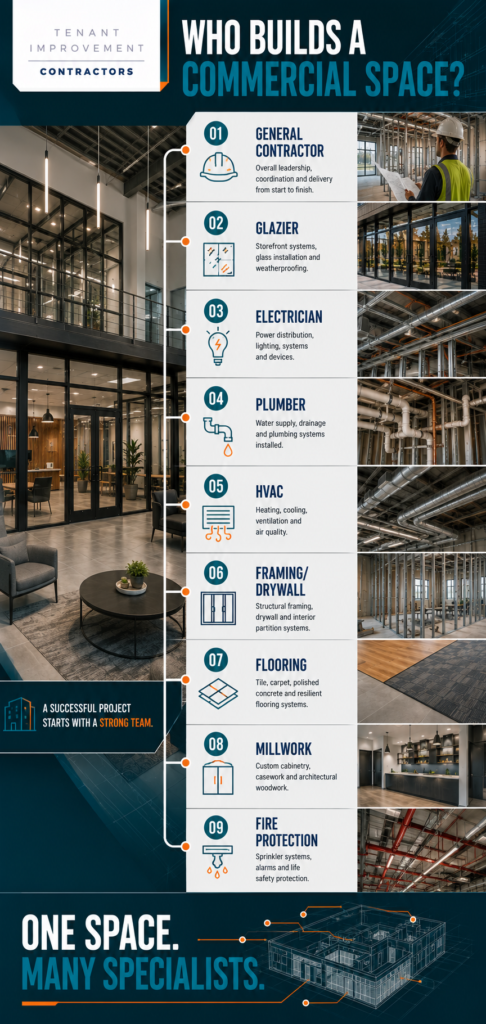
Understanding your TIA is only the first step. A commercial build-out still takes a general contractor, architect, engineer, and specialty trades working from one coordinated budget and schedule — so the allowance, the construction cost, and the finished space all line up.
Preliminary Pricing
We provide realistic construction pricing early, before your TIA is finalized in the lease.
Draw & Reimbursement Support
We manage the documentation — invoices, lien releases, inspections — your TIA reimbursement requires.
Budget Transparency
We track allowance, tenant contribution, and forecasted cost as separate, visible numbers throughout the project.
Clean Closeout
Complete documentation, inspections and lien releases so your TIA reimbursement isn't delayed at the finish line.
Bay Area Tenant Improvement Coverage
Tenant Improvement Licensed Contractors serves commercial clients throughout the San Francisco Bay Area — from San Francisco and Oakland to San Jose, the Peninsula, the East Bay and the North Bay.

Tenant Improvement Allowance FAQs
Explore Tenant Improvement Trades, Project Types, Guides & Locations
Every build-out connects specialty trades, the type of property, the stage of the project, and where it is built. Find the page you need below.
Specialty Trades
- Tenant Improvement General Contractor
- Architectural Design, Space Planning & Permitting
- Commercial Demolition Contractors
- Commercial Concrete Contractors
- Framing, Drywall & Acoustic Ceilings
- Commercial Plumbing & Restroom Build-Outs
- Commercial Electrical & Lighting
- Commercial Lighting Contractors
- Commercial HVAC & Mechanical Modifications
- Fire Sprinklers & Life Safety Systems
- Low-Voltage & Data Cabling
- Commercial Security Systems
- Commercial Access Control Systems
- Commercial Roofing Contractors
- Storefront Glazing, Framing & Installation
- Commercial Flooring Installation
- Custom Millwork, Cabinetry & Casework
- Painting, Wall Coverings & Interior Glazing
- Commercial Elevator Contractors
- Commercial Signage Contractors
Project Types
Plan Your Project
Talk to a Contractor Before You Negotiate Your TIA

Licensed commercial contractors for tenant improvements and build-outs in Arizona, California, Colorado, Florida, Illinois, Nevada, New York, Oregon, Texas, Utah, and Washington.
Quick Links
States We Serve
© 2026 Tenant Improvement Contractors. All rights reserved.