Tenant Improvement Design Build Contractor
Tenant Improvement Design-Build Contractors Streamline Commercial Renovations Through Integrated Planning, Design, and Construction
Tenant Improvement Design Build Contractor services help commercial properties throughout the western United States prepare for new tenants, business growth, and long-term success.
Tenant improvement design-build projects combine design, planning, and construction into one coordinated process that helps commercial properties adapt to changing business needs, new tenant occupancy, and long-term operational goals. Throughout the western United States, office buildings, medical facilities, retail centers, restaurants, industrial properties, life science campuses, hospitality venues, educational facilities, and mixed-use developments regularly utilize the design-build approach to simplify commercial tenant improvements while improving project coordination.
Tenant improvement design-build services involve far more than construction alone. Successful projects require integrating architectural design, engineering, permitting, budgeting, scheduling, building systems, code compliance, accessibility, inspections, and construction management from the earliest stages of project development through final occupancy.
Tenant Improvement Design-Build Contractor provides educational resources that help building owners, developers, property managers, facility managers, architects, engineers, commercial real estate professionals, business owners, and contractors better understand integrated commercial tenant improvements throughout the western United States.
Design-Build Helps Commercial Projects Move More Efficiently
Many commercial property owners choose design-build because planning and construction occur through one coordinated team.
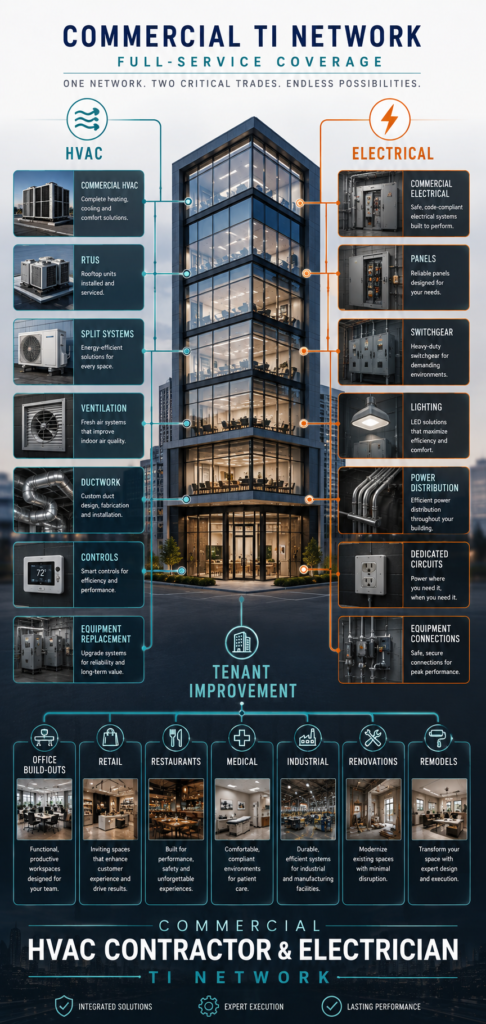
Tenant improvement design-build projects frequently include:
- Office build-outs
- Medical office improvements
- Retail tenant improvements
- Restaurant construction
- Industrial office renovations
- Laboratory build-outs
- Hospitality renovations
- Mixed-use commercial developments
Rather than managing multiple independent consultants and contractors, many owners prefer a coordinated project approach that improves communication, scheduling, and overall project efficiency.
Every Commercial Project Has Different Design Objectives
No two tenant improvement projects require the same planning strategy.
Common project considerations include:
- Tenant requirements
- Space planning
- Lease obligations
- Building permits
- Code compliance
- ADA accessibility
- Construction budgets
- Occupancy schedules
Every commercial property presents unique operational goals, infrastructure limitations, regulatory requirements, and business priorities that influence project development.
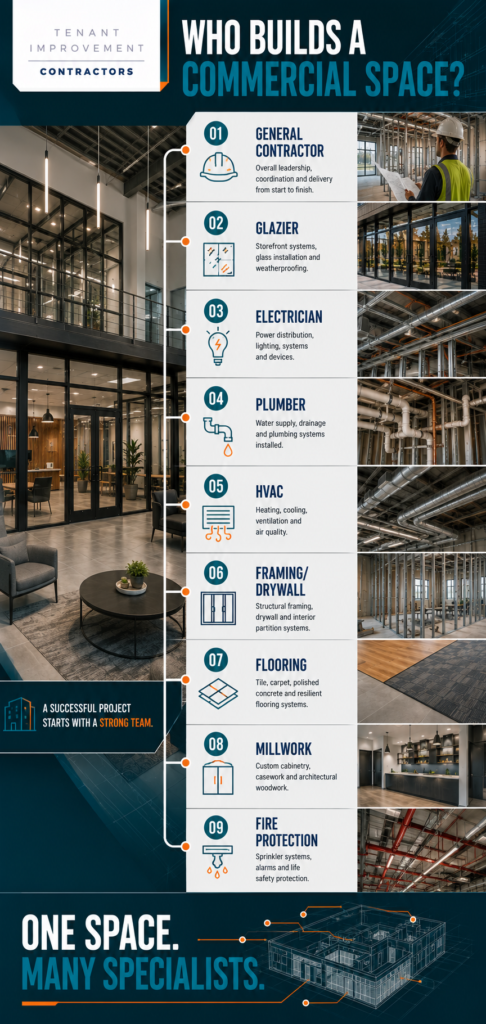
Design-Build Coordinates Every Phase Of Construction
Integrated project delivery improves communication between planning and construction teams.
Projects commonly involve:
- Space planning
- Architectural coordination
- Interior demolition
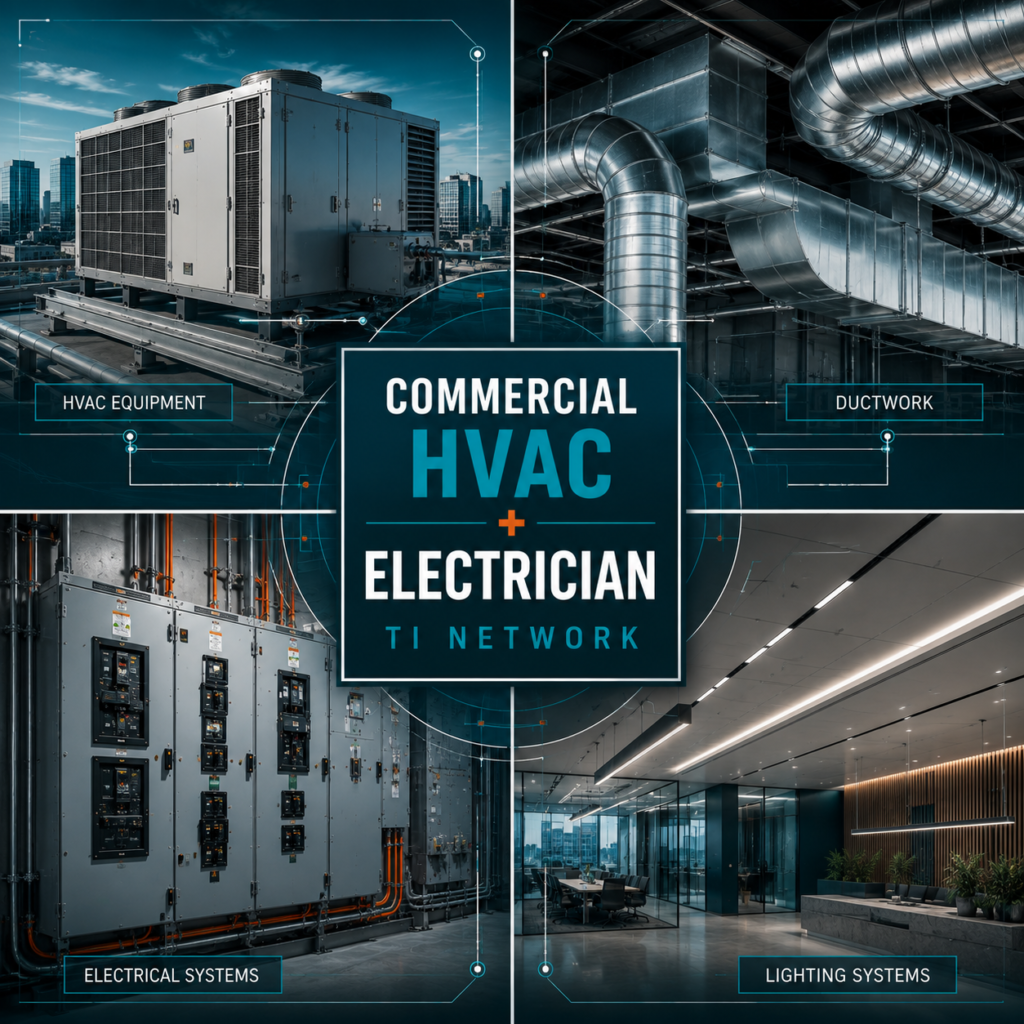
- Mechanical systems
- Electrical infrastructure
- Plumbing systems
- Fire sprinkler modifications
- Interior architectural finishes
Coordinating planning and construction under one team helps reduce design conflicts, improve scheduling, and maintain consistent project quality.
Western Commercial Buildings Present Unique Design Challenges
Commercial projects throughout the western United States often require specialized planning because of regional construction standards.
Many projects involve:
- Seismic design requirements
- Energy efficiency regulations
- Water conservation standards
- High-performance building systems
- Occupied commercial buildings
- Aging commercial properties
- Sustainability initiatives
- Urban construction logistics
Successfully completing design-build tenant improvements requires balancing modernization with regional regulations, operational priorities, and long-term investment goals.
Business Continuity Begins During Project Planning
Many commercial renovations occur while portions of a building remain occupied.
Project planning frequently includes:
- Phased construction
- Temporary occupant access
- Construction sequencing
- Dust containment
- Noise management
- After-hours construction
- Weekend scheduling
- Business continuity planning
Early coordination often allows businesses to continue operating while construction progresses safely and efficiently.
Modern Design-Build Projects Focus On Long-Term Performance
Today’s commercial renovations emphasize functionality, efficiency, flexibility, and future adaptability.
Improvement strategies often include:
- Flexible floor plans
- Energy-efficient lighting
- HVAC modernization
- Smart building technology
- Sustainable materials
- Accessibility enhancements
- Collaborative environments
- Future tenant flexibility
These improvements help commercial properties remain competitive while improving operational efficiency and reducing long-term ownership costs.
Questions Property Owners Frequently Ask
Design-build projects often require balancing project schedules with long-term investment performance.
Common questions include:
- Is design-build the right delivery method for this project?
- How can planning and construction move forward more efficiently?
- Which building systems should be upgraded?
- How will current building codes affect the project?
- What improvements provide the greatest long-term value?
- How can construction delays be minimized?
- Which upgrades improve future leasing opportunities?
- How can operational disruptions be reduced?
- What strategy best supports long-term property performance?
Careful planning often produces stronger project outcomes while improving long-term commercial building performance.
Preparing Commercial Buildings For Future Tenants
Many owners use the design-build process to prepare commercial properties for changing business needs and future occupancy.
Future-focused improvements often include:
- Flexible floor plans
- Technology infrastructure
- Building automation systems
- Electrical capacity upgrades
- HVAC modernization
- Sustainable building improvements
- Accessibility enhancements
- Long-term capital improvement planning
Preparing commercial buildings for future occupancy helps improve leasing flexibility, operational efficiency, tenant satisfaction, and long-term asset value.
Why Tenant Improvement Design-Build Contractor Focuses On Integrated Commercial Construction
Commercial buildings throughout the western United States continue evolving as businesses expand, industries modernize, technologies advance, and tenant expectations change. Integrated design-build delivery helps existing commercial properties remain competitive by improving collaboration, streamlining project execution, and supporting long-term investment value.
Tenant Improvement Design-Build Contractor provides educational resources that help building owners, developers, property managers, facility managers, architects, engineers, commercial real estate professionals, business owners, and contractors better understand design-build project delivery, office build-outs, retail tenant improvements, medical office construction, industrial renovations, project coordination, code compliance, construction planning, and long-term commercial building performance.
Whether delivering a design-build office project in Seattle, coordinating a medical facility renovation in the Bay Area, completing a retail tenant improvement in Southern California, modernizing an industrial office in Denver, developing a commercial workspace in Phoenix, or repositioning a mixed-use property in Las Vegas, informed planning and integrated project management help create commercial environments that support today’s businesses while preparing buildings for tomorrow’s opportunities. For federal accessibility requirements referenced throughout this process, see the U.S. Access Board’s ADA Accessibility Guidelines.
Related Services
Explore more commercial construction and tenant improvement resources:
Ready to Start Your Design-Build Project?
Licensed commercial contractors for tenant improvements and build-outs in Arizona, California, Colorado, Florida, Illinois, Nevada, New York, Oregon, Texas, Utah, and Washington.
Quick Links
States We Serve
© 2026 Tenant Improvement Contractors. All rights reserved.