The Tenant Improvement Construction Process: Step 4
From mobilization to final finishes, here is how a typical build-out runs and what keeps it on schedule.
Construction is the fourth stage of a tenant improvement and the one most people picture. By this point the plan is set, the permit is issued, and the budget is agreed. The job now is to build it safely, in the right order, and on schedule.
Every project is different, but most interior build-outs follow the same basic sequence. Knowing it helps owners and tenants understand progress and make decisions at the right time.
Preconstruction and Mobilization
Before work begins on site:
- Building rules, work hours, and access agreed with the landlord
- Certificates of insurance and permits posted
- Long-lead items ordered and delivery dates confirmed
- Protection installed in lobbies, elevators, and corridors
- Site logistics for deliveries and debris
A preconstruction meeting with the owner, landlord, and trades sets expectations for the whole job.
Demolition and Discovery
The first phase clears the space:
- Make-safe of electrical, plumbing, and fire systems
- Selective demolition of walls, ceilings, and floors
- Hazardous material abatement if the survey requires it
- Documentation of hidden conditions
- Layout of new walls on the slab
Conditions found during demolition are reviewed quickly so they do not hold up the next phase.
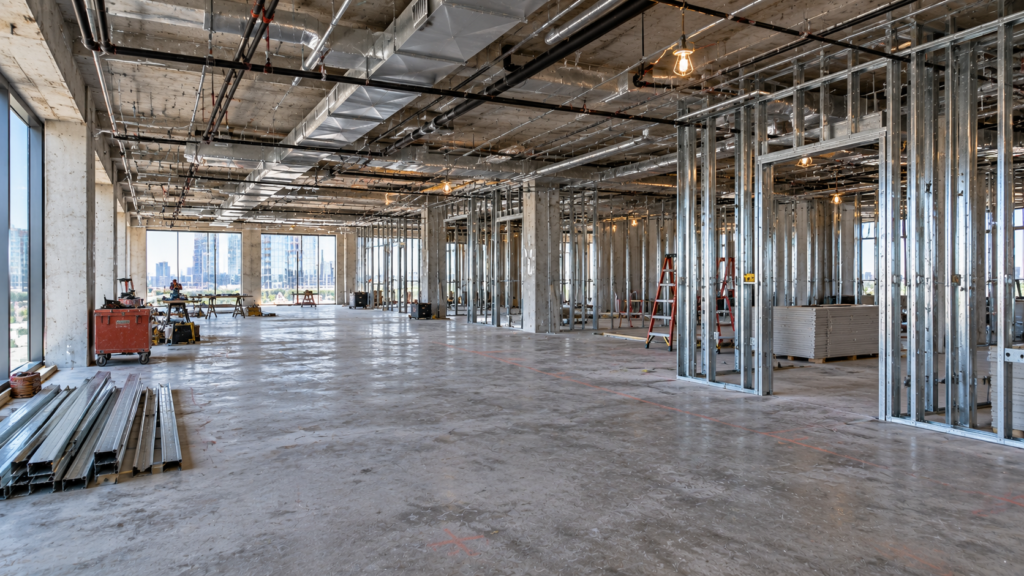
Rough-In
With the space open, the systems go in:
- Wall framing and overhead supports
- Plumbing below slab and in walls
- Electrical conduit, boxes, and panels
- HVAC ductwork, equipment, and controls
- Fire sprinkler piping and alarm devices, plus low-voltage pathways
Rough-in inspections must pass before walls and ceilings can be closed.
Close-In
Once inspections pass, the space starts to look finished:
- Insulation and acoustic batts
- Drywall hanging, taping, and finishing
- Ceiling grid and tile
- Door frames and interior glazing
- Firestopping at rated walls
Any missed rough-in item becomes much more expensive after this point.
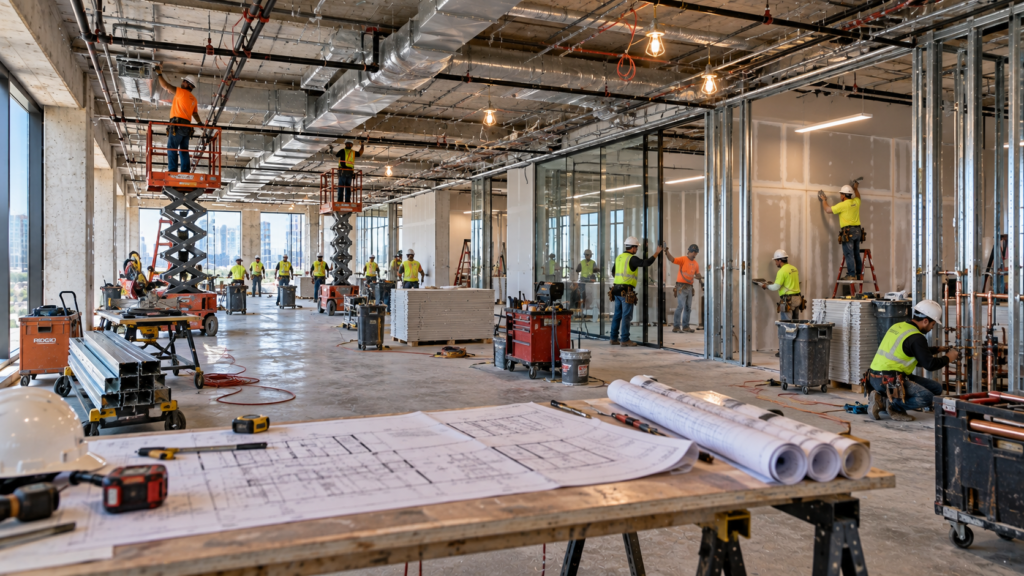
Finishes and Trim-Out
The final phase brings the design to life:
- Paint, wall coverings, and flooring
- Millwork, countertops, and casework
- Light fixtures, devices, and plumbing fixtures
- HVAC balancing and controls programming
- Signage, IT, security, and furniture installation
Finishes are sequenced carefully so later trades do not damage completed work.
Communication and Change Management
Good projects run on steady communication:
- Weekly meetings with owner, designer, and contractor
- Updated schedules and look-ahead plans
- Written requests for information and quick answers
- Change orders priced and approved before work proceeds
- Photo documentation of progress and concealed work
Fast decisions from the owner side are one of the biggest factors in staying on schedule.
Frequently Asked Questions
How long does tenant improvement construction take?
A light office refresh might take a few weeks, while a full build-out with new restrooms, kitchens, or medical systems can take several months.
Can we stay open during construction?
Sometimes, with phasing, temporary walls, and after-hours work. It usually adds cost and time but can make sense for businesses that cannot close.
What causes the most construction delays?
Late decisions, long-lead equipment, failed inspections, and hidden conditions found during demolition are the most common causes.
Continue the Guide
Keep going with the next stage, or read related pages:
Explore Tenant Improvement Trades, Project Types, Guides & Locations
Every build-out connects specialty trades, the type of property, the stage of the project, and where it is built. Find the page you need below.
Specialty Trades
- Tenant Improvement General Contractor
- Architectural Design, Space Planning & Permitting
- Commercial Demolition Contractors
- Commercial Concrete Contractors
- Framing, Drywall & Acoustic Ceilings
- Commercial Plumbing & Restroom Build-Outs
- Commercial Electrical & Lighting
- Commercial Lighting Contractors
- Commercial HVAC & Mechanical Modifications
- Fire Sprinklers & Life Safety Systems
- Low-Voltage & Data Cabling
- Commercial Security Systems
- Commercial Access Control Systems
- Commercial Roofing Contractors
- Storefront Glazing, Framing & Installation
- Commercial Flooring Installation
- Custom Millwork, Cabinetry & Casework
- Painting, Wall Coverings & Interior Glazing
- Commercial Elevator Contractors
- Commercial Signage Contractors
Project Types
Plan Your Project
Ready to Build Out Your Space?
Licensed commercial contractors for tenant improvements and build-outs in Arizona, California, Colorado, Florida, Illinois, Nevada, New York, Oregon, Texas, Utah, and Washington.
Quick Links
States We Serve
© 2026 Tenant Improvement Contractors. All rights reserved.