Budgeting a Tenant Improvement: Step 3
Build a budget that covers the whole project, not just the construction contract.
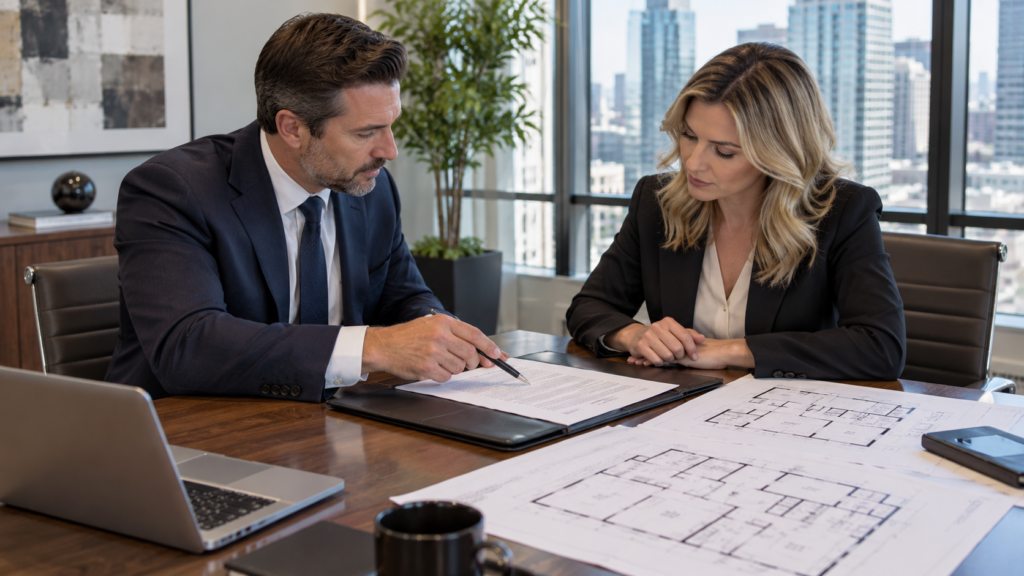
The third stage of a tenant improvement is turning the plan and permit drawings into a firm budget. A good budget does more than total up bids. It accounts for every cost the project will carry and protects against the surprises that existing buildings tend to hide.
This guide explains how tenant improvement budgets are usually structured and where they most often go wrong.
Hard Costs and Soft Costs
A complete budget includes both:
- Hard costs: demolition, construction, and all trade work
- Soft costs: design, engineering, permits, and fees
- Furniture, fixtures, and equipment (FF&E)
- IT, security, and audio-visual systems
- Moving, signage, and project management
Leaving out soft costs and FF&E is one of the most common budgeting mistakes.
The Tenant Improvement Allowance
Many leases include a tenant improvement allowance (TIA) from the landlord:
- Usually stated as a dollar amount per square foot
- May be limited to hard costs or allow some soft costs
- Often paid on reimbursement with lien releases
- Unused allowance may or may not be available as rent credit
- Costs above the allowance are paid by the tenant
Our guide to the tenant improvement allowance covers how TIAs are negotiated and paid.
What Drives Cost
The biggest factors in tenant improvement cost are usually:
- How much of the existing space can be reused
- New restrooms, kitchens, and plumbing
- HVAC capacity and zoning changes
- Electrical service upgrades
- Finish level, glazing, and millwork
Second-generation spaces that match the program can cost far less than a cold shell.
Contingency
Existing buildings hide conditions that only appear during construction:
- Design contingency while drawings are still developing
- Construction contingency for unknown conditions
- Owner contingency for scope changes
- Separate allowances for unresolved items
- A clear process for approving contingency use
Many owners carry a contingency of around 5 to 10 percent, and more for older buildings.
Long-Lead Items and Escalation
Some costs depend on timing:
- HVAC units, switchgear, and transformers with long lead times
- Storefront glazing and specialty doors
- Price escalation between bid and purchase
- Expedite fees to protect a move-in date
- Early release of critical orders
Buying long-lead items early can protect both the budget and the schedule.
Bids and Change Orders
Controlling cost continues after the contract is signed:
- Compare bids scope by scope, not just by total
- Clarify exclusions and allowances in every bid
- Agree on change order pricing before work starts
- Track approved and pending changes weekly
- Reconcile allowances at closeout
Clear scopes up front are the best protection against change orders later.
Frequently Asked Questions
How much does a tenant improvement cost per square foot?
It varies widely by market, building condition, and scope. A light refresh can cost a fraction of a full build-out with new restrooms and systems. Local contractor pricing on your actual drawings is the only reliable number.
Does the tenant improvement allowance cover furniture?
Often not. Many allowances are limited to construction and some soft costs. Check the work letter for what qualifies.
How much contingency should we carry?
Many owners carry around 5 to 10 percent of construction cost, and more for older buildings or incomplete drawings.
Continue the Guide
Keep going with the next stage, or read related pages:
Explore Tenant Improvement Trades, Project Types, Guides & Locations
Every build-out connects specialty trades, the type of property, the stage of the project, and where it is built. Find the page you need below.
Specialty Trades
- Tenant Improvement General Contractor
- Architectural Design, Space Planning & Permitting
- Commercial Demolition Contractors
- Commercial Concrete Contractors
- Framing, Drywall & Acoustic Ceilings
- Commercial Plumbing & Restroom Build-Outs
- Commercial Electrical & Lighting
- Commercial Lighting Contractors
- Commercial HVAC & Mechanical Modifications
- Fire Sprinklers & Life Safety Systems
- Low-Voltage & Data Cabling
- Commercial Security Systems
- Commercial Access Control Systems
- Commercial Roofing Contractors
- Storefront Glazing, Framing & Installation
- Commercial Flooring Installation
- Custom Millwork, Cabinetry & Casework
- Painting, Wall Coverings & Interior Glazing
- Commercial Elevator Contractors
- Commercial Signage Contractors
Project Types
Plan Your Project
Get a Realistic Budget for Your Build-Out

Licensed commercial contractors for tenant improvements and build-outs in Arizona, California, Colorado, Florida, Illinois, Nevada, New York, Oregon, Texas, Utah, and Washington.
Quick Links
States We Serve
© 2026 Tenant Improvement Contractors. All rights reserved.