Commercial Glazing Contractors
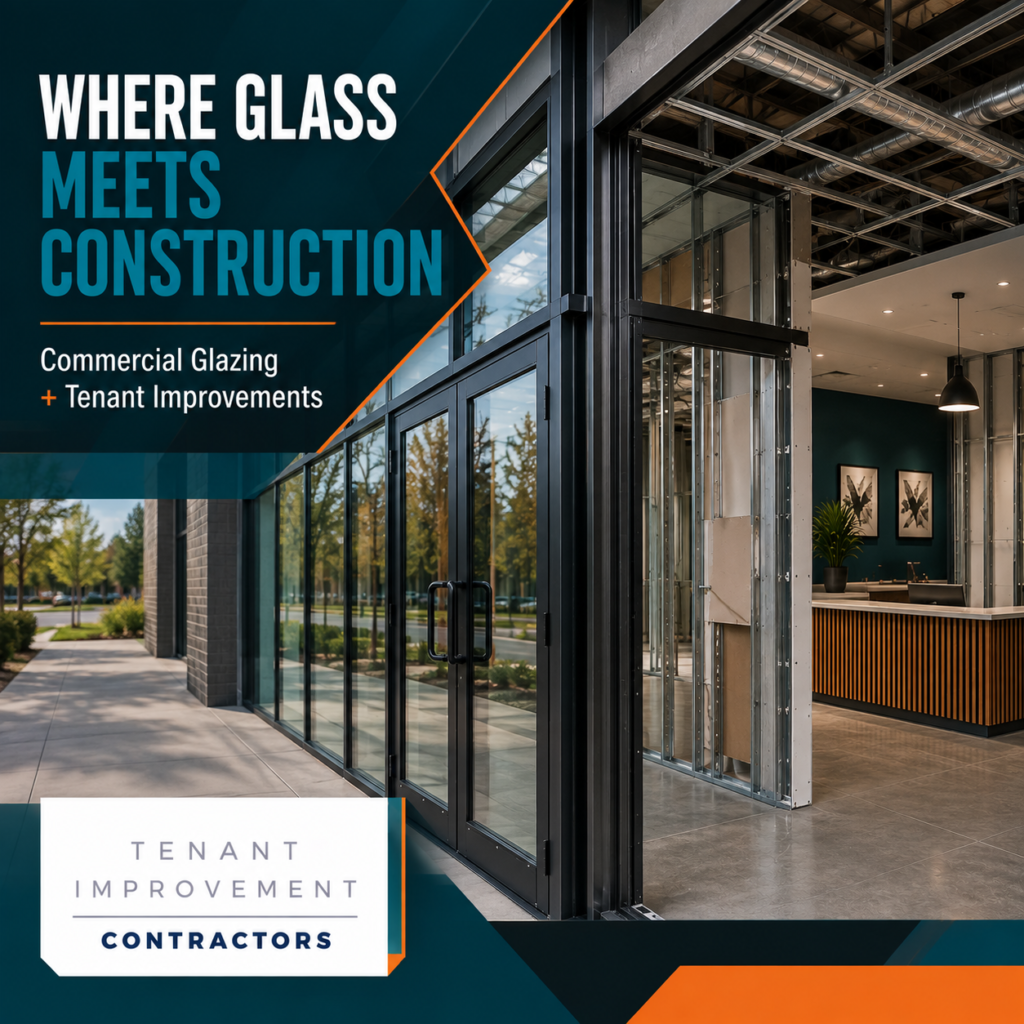
Storefront glass, curtain wall, entrances and interior glazing — installed as part of your tenant improvement build-out.
Network from California to New York.
Glass and Build-Out, Delivered by One Contractor
Most commercial glazing problems are really coordination problems. The glass arrives before the opening is framed. The door hardware does not match the access-control spec. The storefront gets set before the slab is poured to finish height. Each one is a small mistake, and each one stops three other trades while it gets sorted out.
We handle commercial glazing as part of the tenant improvement, not as a separate job bolted on at the end. Framing, glass, doors, hardware, sealants and the interior build-out sit on one schedule, run under one set of permits, and get closed out by one licensed contractor. That is the difference between a storefront that gets installed and a storefront that gets installed on the date you promised your landlord.
Our glazing crews work throughout the SF Bay Area, Los Angeles, Dallas, Las Vegas, or NYC on occupied buildings, dark shells, and everything in between — from a single cracked lite in a retail entrance to a full storefront replacement across a multi-tenant property.
Commercial Glazing Services
Everything on the glass line of your build-out, self-performed or managed by our own project team.
Storefront Systems
Aluminum storefront framing, thermally broken systems and full storefront replacement for retail, office and mixed-use frontage.
Curtain Wall & Window Wall
Stick-built curtain wall, window wall and punched-opening glazing coordinated with the building envelope scope.
Entrances & Door Hardware
Manual and automatic entrances, closers, panic devices, locksets and access-control prep that matches your security spec.
Interior Glass & Office Fronts
Demountable office fronts, conference-room glazing, sidelites and frameless interior partitions for open-plan build-outs.
Glass Replacement & Repair
Emergency board-up, single-lite replacement, failed insulated units and frame repair on occupied commercial properties.
Safety & Insulated Glazing
Tempered and laminated safety glass, insulated units, low-E coatings and security glazing selected to the performance spec.
Sealants & Weatherproofing
Perimeter sealants, glazing gaskets, sill flashing and water testing so the opening keeps performing after turnover.
Code & ADA Compliance
Egress hardware, approach clearances, opening force and glazing safety requirements documented for inspection.
The Five Parts of a Commercial Storefront
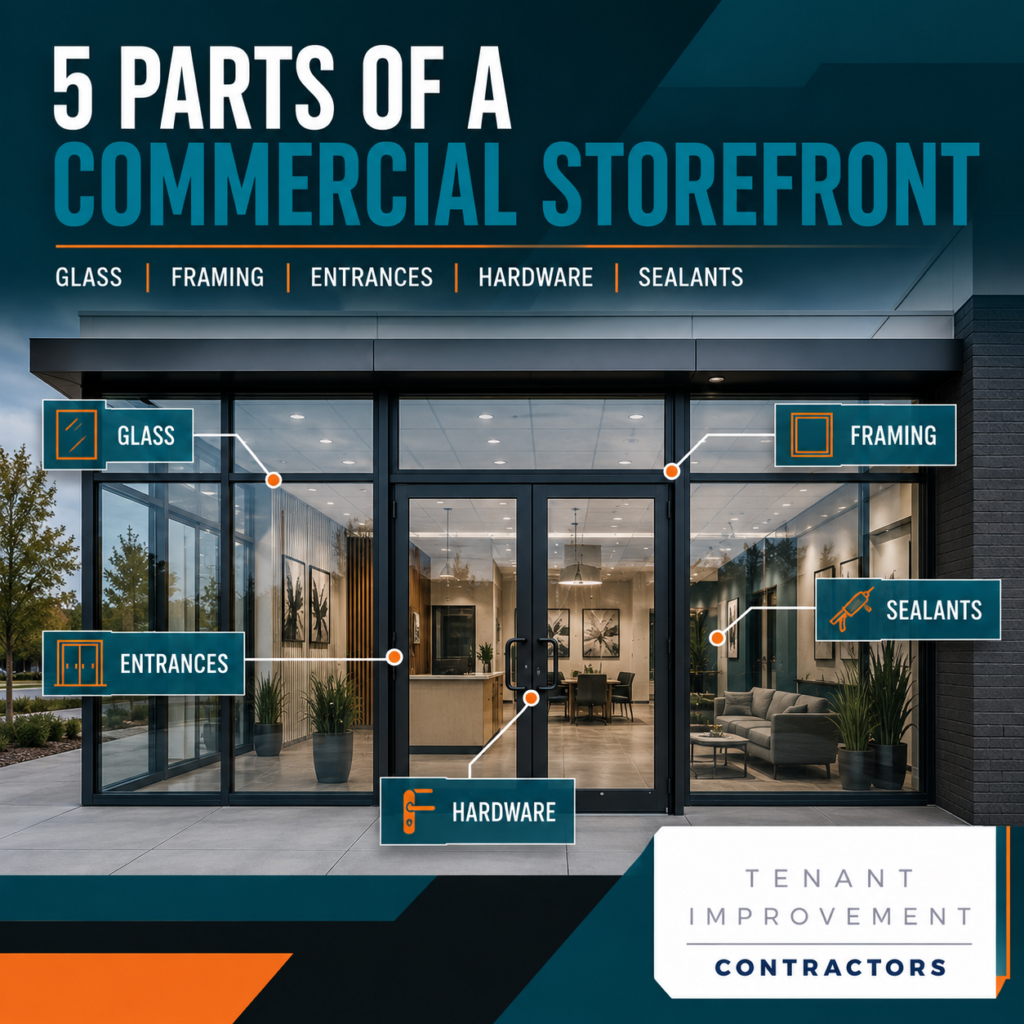
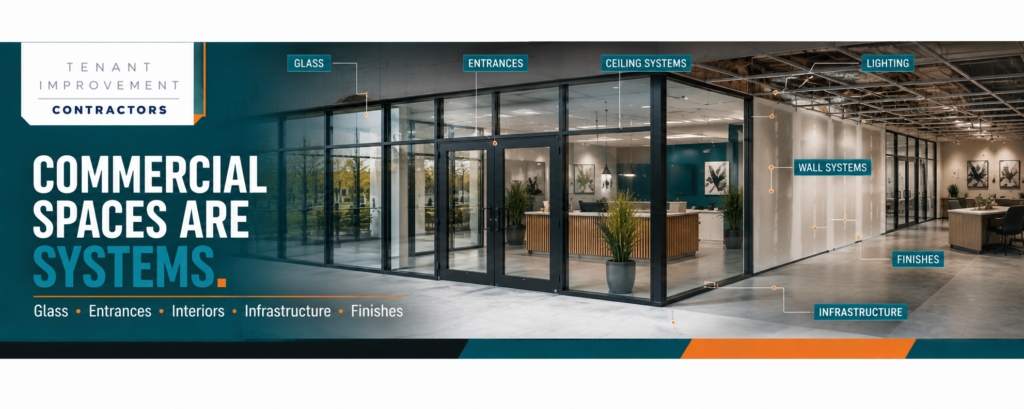
A storefront is not one product. It is five components working as a system, and when one of them fails the other four carry the load until they fail too.
Glass. The lite itself — tempered, laminated or insulated, sized and specified for the opening, the exposure and the code requirement.
Framing. The aluminum that holds the glass, transfers load to the structure and sets the sightlines a designer drew.
Entrances. Doors take the abuse. Every cycle works the frame, the threshold and the anchorage a little harder.
Hardware. Closers, pivots, locks and panic devices are what actually decide whether a door is safe, code-compliant and pleasant to use.
Sealants. The least visible part and the most common source of a call two winters later.
We specify and install all five together, so no one gets to point at the other guy when something leaks.
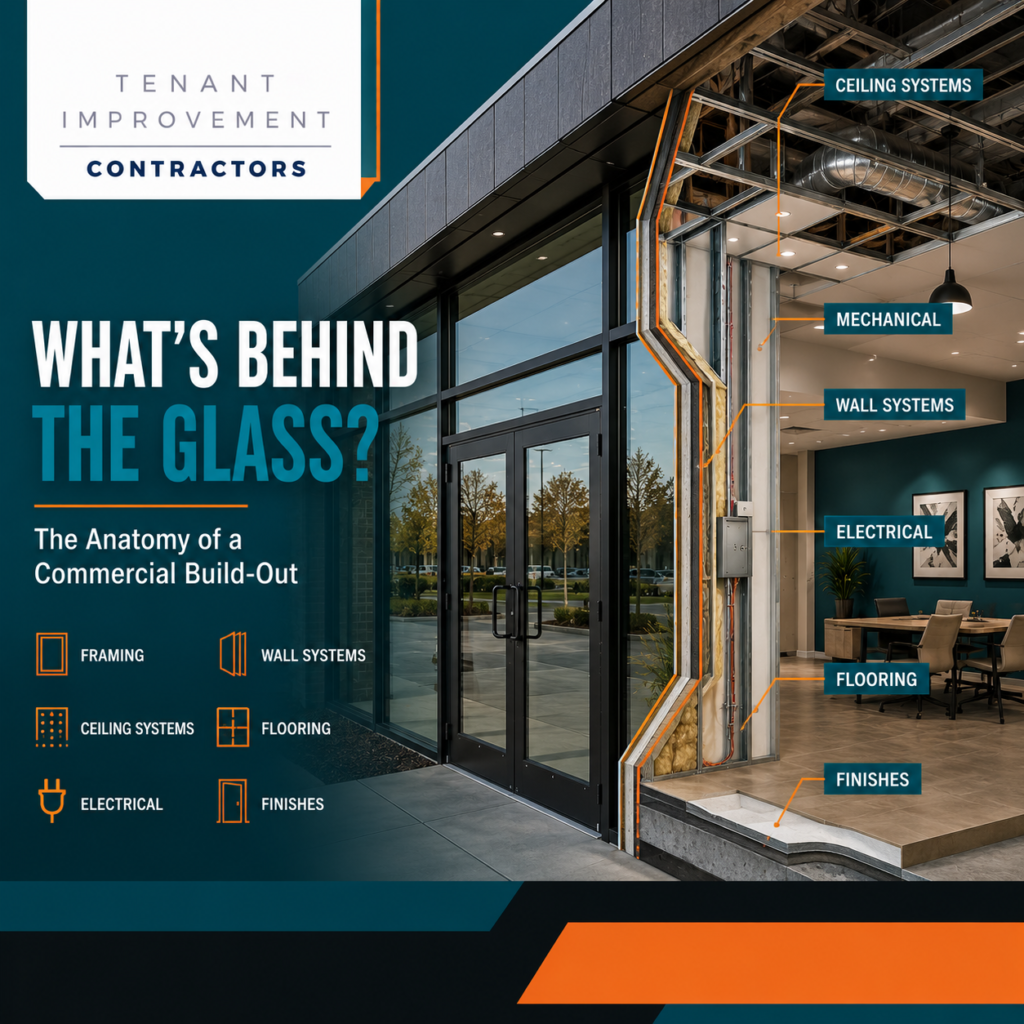
What's Behind the Glass
The glazing line is where the exterior envelope hands off to the interior build-out, and it is the seam where most tenant improvement schedules get into trouble.
Behind the glass sits the framing that defines the space, the wall assembly and insulation, the mechanical and electrical runs feeding the ceiling, the ceiling grid and lighting, the flooring transitions at the sill, and the finishes a tenant actually sees on opening day. Every one of those trades has an opinion about when the glass should go in.
Because we run the build-out and the glazing, that argument happens in a coordination meeting instead of on your job site. We sequence the opening so framing, waterproofing, glazing and finishes each get the access they need, in the order that does not force anyone to take work back apart.
Commercial Glazing, Explained on Video
Short field briefings on storefront systems, glass failure and why commercial glazing behaves differently in each Bay Area city.
Commercial Storefront Glass | Tenant Improvement & Office Build-Out Experts
Commercial Storefront Glass Failure Explained
Why San Francisco Commercial Glass Fails Faster
Oakland Commercial Glass Repair: High-Traffic Buildings
San Jose Commercial Glass Repair: Technology Campuses
SF vs Oakland vs San Jose: Storefront Systems Explained
Why Glass Repairs Differ in Palo Alto, San Mateo & San Rafael
Palo Alto vs San Mateo vs San Rafael: Glass Performance
Historic Storefront Glass Restoration
Storefront Failure Points We Repair
Small failures, big consequences. Most of what we get called out for started as something a property manager walked past for six months.
Broken glass. Cracks and breaks compromise safety, security and visibility, and an ordered-to-size commercial lite is rarely a same-day item. We board up, secure the opening and replace to spec.
Failed sealants. Deteriorated or missing sealant lets air, water and contaminants into the assembly. It is the cheapest thing on this list to fix and the most expensive to ignore.
Door misalignment. Doors that bind, sag or sit out of alignment wear the frame, defeat the closer and eventually stop latching.
Frame damage. Bent, cracked or corroded framing weakens the structure and breaks the weatherproofing line, no matter how new the glass is.
Water intrusion. Leaks at the sill and head travel into flooring, drywall and finishes long before anyone sees a stain.
Hardware failure. Worn or broken closers, pivots and panic devices are a life-safety and accessibility issue, not a nuisance.
Impact damage. Vehicle strikes, break-ins and high-traffic abuse cause localized damage that spreads through the system over time.
We repair, upgrade or rebuild depending on what the assembly can still carry — and we tell you plainly which one you are looking at.
Where Glazing Fits in the TI Schedule
Glazing is step six of nine on a typical tenant improvement, and it is the step most likely to be scheduled wrong.
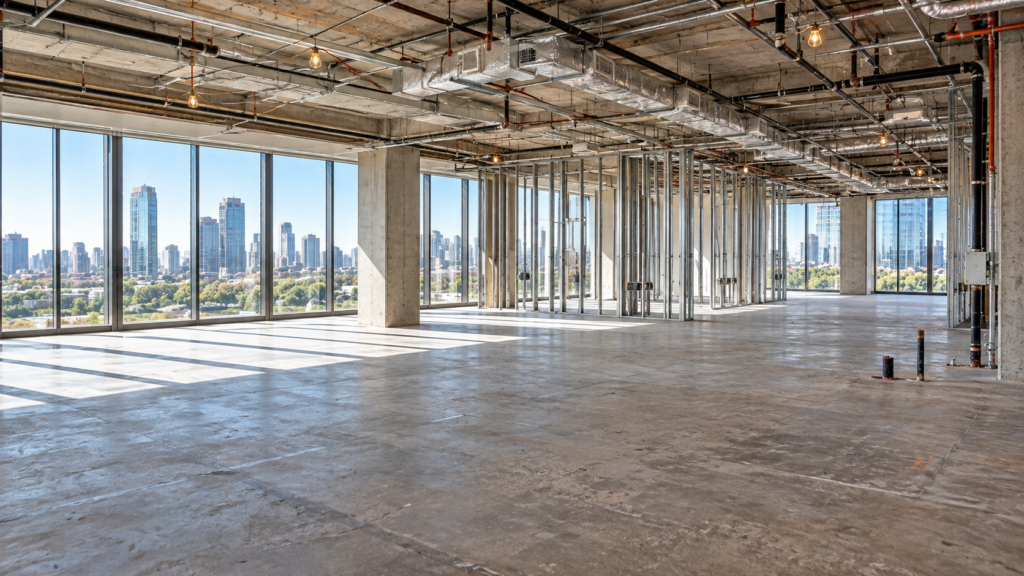
The lease gets signed. We plan and design the space around how your business actually operates. Permits go in and we work them through the local building department. Demolition clears the existing conditions. Build-out puts up framing, walls, MEP, ceilings and the first round of finishes.
Then glazing. Storefront systems go in once the opening is framed true, the waterproofing detail is ready to receive them, and the interior is far enough along that the glass is not being used as a construction barrier. Set it too early and it gets damaged. Set it too late and every finish trade behind it waits.
Inspections follow, then turnover, then you open. Because one contractor holds all nine steps, the glazing date is a real date instead of a hope.
One Project. Multiple Trades. One Point of Accountability.
A commercial space takes a general contractor, a glazier, an electrician, a plumber, an HVAC contractor, framers, flooring installers, millworkers and fire protection — all touching the same square footage in a specific order.
When glazing is a separate contract, the glazier answers to a different schedule than the trades on either side of them, and the seams between scopes become your problem. Sequencing conflicts, damaged glass, warranty finger-pointing and a punch list nobody owns are all symptoms of the same structure.
We hold the glazing scope inside the tenant improvement contract. One team aligned to your goals, one process, one standard of quality, one commitment to the date on your lease — and one company to call when something needs to be made right.
One Point of Contact
A single project manager owns the glazing scope and the build-out around it.
One Schedule
Glass, framing, MEP and finishes are sequenced together instead of negotiated on site.
One Inspection Path
Permits, inspections and code documentation handled by the same team that built it.
One Warranty
No gap between the glazing warranty and the construction warranty for you to fall into.
Bay Area Commercial Glazing Coverage
Glass does not behave the same way across the Bay. High-rise frontage in San Francisco takes wind and salt air. Oakland storefronts take traffic and impact. San Jose campuses need precision and clean access around working tenants. Peninsula and North Bay properties sit somewhere in between.
San Francisco · Oakland · San Jose · Palo Alto · San Mateo · Fremont · Berkeley · Walnut Creek · San Rafael · Santa Clara

Commercial Glazing FAQs
Explore Tenant Improvement Trades, Project Types, Guides & Locations
Every build-out connects specialty trades, the type of property, the stage of the project, and where it is built. Find the page you need below.
Specialty Trades
- Tenant Improvement General Contractor
- Architectural Design, Space Planning & Permitting
- Commercial Demolition Contractors
- Commercial Concrete Contractors
- Framing, Drywall & Acoustic Ceilings
- Commercial Plumbing & Restroom Build-Outs
- Commercial Electrical & Lighting
- Commercial Lighting Contractors
- Commercial HVAC & Mechanical Modifications
- Fire Sprinklers & Life Safety Systems
- Low-Voltage & Data Cabling
- Commercial Security Systems
- Commercial Access Control Systems
- Commercial Roofing Contractors
- Storefront Glazing, Framing & Installation
- Commercial Flooring Installation
- Custom Millwork, Cabinetry & Casework
- Painting, Wall Coverings & Interior Glazing
- Commercial Elevator Contractors
- Commercial Signage Contractors
Project Types
Plan Your Project
Talk to a Commercial Glazing Contractor

Licensed commercial contractors for tenant improvements and build-outs in Arizona, California, Colorado, Florida, Illinois, Nevada, New York, Oregon, Texas, Utah, and Washington.
Quick Links
States We Serve
© 2026 Tenant Improvement Contractors. All rights reserved.