Commercial Concrete Contractors for Tenant Improvements
Saw-cutting, trenching, leveling, and patching that prepare the slab for everything built on top of it.
Concrete work on a tenant improvement rarely looks like new construction. It is precise, interior work inside an existing building: cutting trenches for new plumbing, coring for conduit, leveling uneven slabs, and patching so the finished floor goes down flat.
Our network connects owners and tenants with licensed concrete contractors who scan before they cut, protect occupied areas, and turn the slab over ready for the flooring installer.
Common Concrete Scopes in a Build-Out
Interior concrete work usually includes some of the following:
- Saw-cutting and trenching for new restroom and sink plumbing
- Core drilling for conduit, piping, and floor boxes
- Patching and pouring back trenches to match the slab
- Equipment pads and housekeeping pads
- Ramps, thresholds, and accessible route corrections
Each of these affects the floor flatness and moisture that the finish flooring depends on.
Scan Before You Cut
Existing slabs can hide conduits, post-tensioned cables, and rebar. Before any cut:
- Ground-penetrating radar (GPR) scanning of the work area
- Review of available structural and as-built drawings
- Identification of post-tensioned slabs, which need special care
- Layout marked on the slab and confirmed with the engineer
- Utilities in the area made safe before cutting
Cutting a post-tensioned tendon is dangerous and expensive, so scanning is a standard step, not an extra.
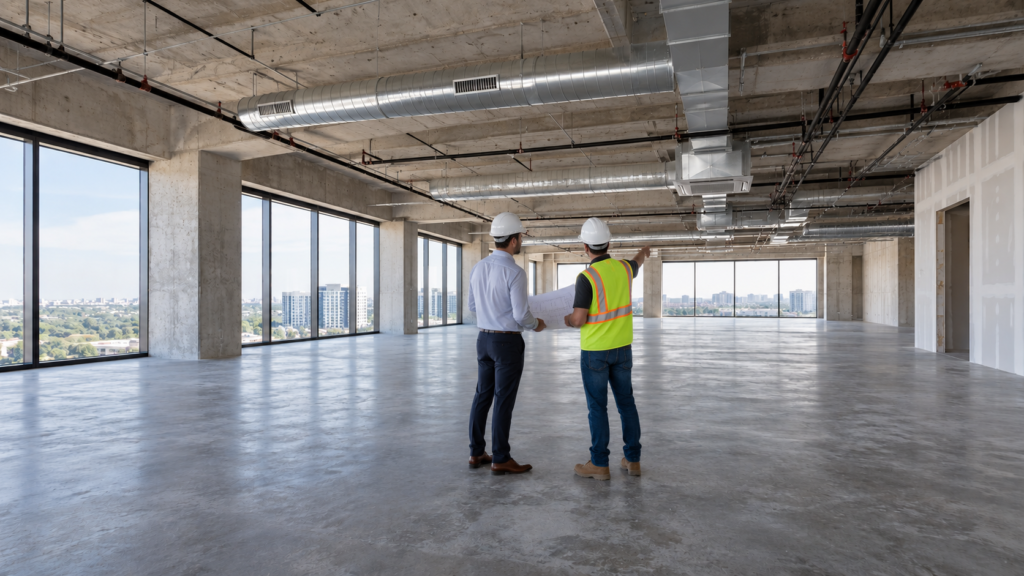
Floor Leveling and Flatness
Older buildings often have slabs that are out of level or have curled joints:
- Grinding high spots and joint lips
- Self-leveling underlayment over larger areas
- Patching compounds for small depressions
- Flatness checks before flooring installation
- Joint treatment so cracks do not telegraph through
A flat substrate is what makes luxury vinyl, tile, and polished concrete look right.
Moisture Testing
Moisture in slabs is a leading cause of flooring failure. A careful concrete scope includes:
- Relative humidity testing using in-situ probes (ASTM F2170)
- Testing after the building is conditioned to its service temperature
- Moisture mitigation systems where readings are high
- Coordination with the flooring manufacturer's limits
- Documenting results for the flooring warranty
Testing early gives time to add mitigation without delaying the finish schedule.
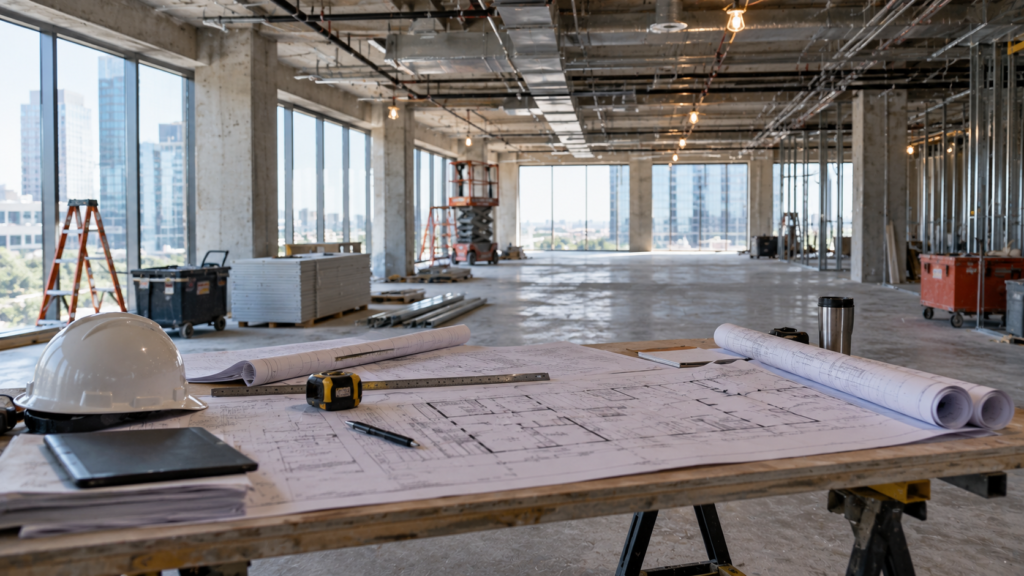
Working in Occupied Buildings
Concrete cutting is loud and dusty, so tenant improvements need a plan for neighbors:
- Wet cutting and vacuum systems to control dust
- Scheduling noisy work after hours where required
- Protection of adjacent suites and common areas
- Slurry containment and proper disposal
- Shoring or protection below elevated slabs
Landlords often set rules for this work, so they belong in the schedule from the start.
Inspections and Turnover
Concrete work ties into several inspections:
- Underground plumbing inspection before trenches are poured back
- Structural observation for cuts in elevated slabs
- Accessible route checks at ramps and thresholds
- Flatness and moisture results handed to the flooring trade
- Photos of embedded work for the closeout record
Pouring back before an inspection is the most common way concrete work gets redone.
Frequently Asked Questions
Why is GPR scanning needed before core drilling?
Slabs can contain conduit, rebar, and post-tensioned cables that are not visible. Scanning locates them so cores and trenches can be placed safely.
How long does a trench pour-back need before flooring?
It depends on the mix, the thickness, and the flooring product. Moisture testing, not a fixed number of days, should decide when flooring can go down.
Can concrete work be done while the building is occupied?
Usually yes, with dust control, protection, and scheduling. Many landlords require noisy cutting to happen after business hours.
Related Services
Explore related build-out trades and tenant improvement services:
Explore Tenant Improvement Trades, Project Types, Guides & Locations
Every build-out connects specialty trades, the type of property, the stage of the project, and where it is built. Find the page you need below.
Specialty Trades
- Tenant Improvement General Contractor
- Architectural Design, Space Planning & Permitting
- Commercial Demolition Contractors
- Framing, Drywall & Acoustic Ceilings
- Commercial Plumbing & Restroom Build-Outs
- Commercial Electrical & Lighting
- Commercial Lighting Contractors
- Commercial HVAC & Mechanical Modifications
- Fire Sprinklers & Life Safety Systems
- Low-Voltage & Data Cabling
- Commercial Security Systems
- Commercial Access Control Systems
- Commercial Roofing Contractors
- Storefront Glazing, Framing & Installation
- Commercial Flooring Installation
- Custom Millwork, Cabinetry & Casework
- Painting, Wall Coverings & Interior Glazing
- Commercial Elevator Contractors
- Commercial Signage Contractors
Project Types
Plan Your Project
Need Slab Work for Your Tenant Improvement?

Licensed commercial contractors for tenant improvements and build-outs in Arizona, California, Colorado, Florida, Illinois, Nevada, New York, Oregon, Texas, Utah, and Washington.
Quick Links
States We Serve
© 2026 Tenant Improvement Contractors. All rights reserved.