Different Types of Tenant Improvements
Not every tenant improvement is the same project. From first-generation shell space to a full-gut renovation, the type of TI you’re building determines the trades, the timeline, and the budget.
First-Generation vs. Second-Generation Space
The most basic distinction in tenant improvement work is whether a space has been occupied before. First-Generation TI is space being built out for its first occupant in new developments — often starting from shell space with unfinished interiors requiring comprehensive infrastructure installation. Second-Generation TI is space previously occupied and improved by another tenant, where existing walls, ceilings, and systems may or may not be reusable for the new layout. A white-box or vanilla-shell space sits in between — partially finished with basic systems but still requiring tenant customization.
Common Types of Tenant Improvement Projects
There are more than 20 recognized categories of tenant improvement — here are eight of the most common.
Office TI
Environments for corporate workspaces, law firms, and professional services.
Retail TI
Storefronts emphasizing customer experience, displays, and merchandising.
Restaurant TI
Commercial kitchens with specialized plumbing, ventilation, and fire systems.
Medical / Healthcare TI
Treatment facilities requiring specialized utilities and accessibility features.
Industrial TI
Production and warehouse operations with equipment infrastructure.
Warehouse / Distribution TI
Modern logistics facilities with technology and automation systems.
Adaptive Reuse TI
Converting buildings to substantially different commercial purposes — warehouses into offices, banks into restaurants.
Occupied-Space TI
Renovations occurring while the business remains open and operational.
Cosmetic Refresh vs. Full-Gut Reconstruction
TI projects also vary by scope of work, not just use. A Cosmetic TI is a refresh involving paint, flooring, lighting, and minor modifications — fast and inexpensive. A Full-Gut TI is complete interior reconstruction, removing most previous improvements down to the shell. A Building-System TI sits between them, prioritizing mechanical, electrical, and plumbing upgrades over finishes, and a Sustainable/Energy-Efficient TI emphasizes LED lighting, HVAC efficiency, and performance standards regardless of scope.
Specialized Space Types
Some tenant improvements are defined by unique infrastructure needs rather than industry. Technology/Data-Intensive TI requires robust power, network, and cooling infrastructure. Fitness/Wellness TI needs specialized flooring, ventilation, and facility systems. Hospitality TI — hotels and guest-facing environments — introduces phased construction challenges around occupied guest areas. Professional Services TI for law, accounting, and consulting firms balances private offices with collaborative space.
Why the Type of TI Changes Everything
The type of tenant improvement drives which trades are involved, how long permitting takes, and what the budget needs to cover.
A restaurant build-out and an office build-out of the same square footage can have wildly different costs, because kitchen plumbing, ventilation, and fire suppression add complexity an office never touches. Knowing your project type early helps set a realistic budget and schedule from day one.
Matching the Contractor to the TI Type
Not every contractor is equally comfortable across all 20+ types of tenant improvement. Medical and restaurant TIs demand specialized code knowledge; adaptive reuse demands experience with older buildings and unpredictable existing conditions. Identifying your project type early helps match the right team, trades, and permitting strategy to the work.
One Contractor, Every Type of Tenant Improvement
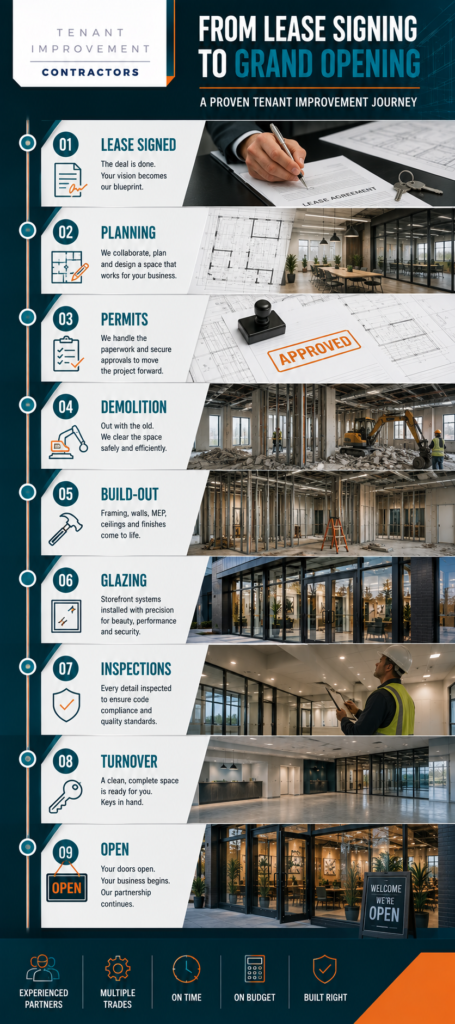
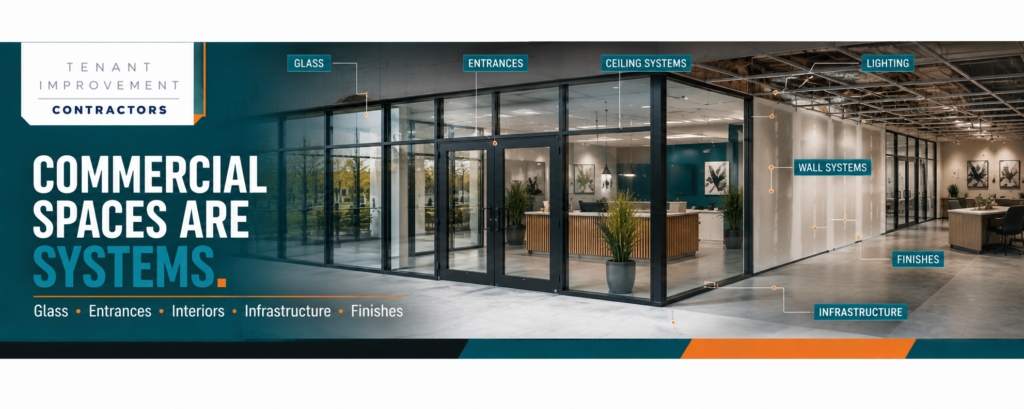
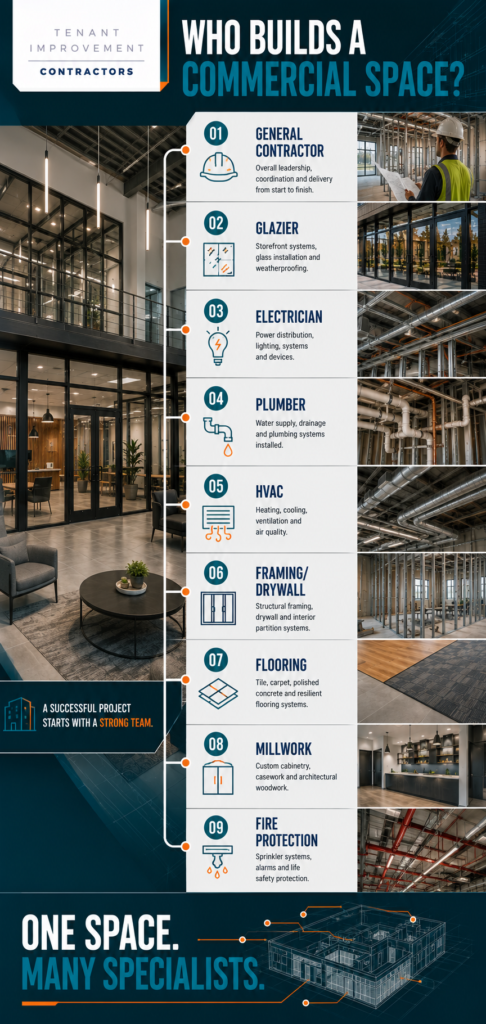
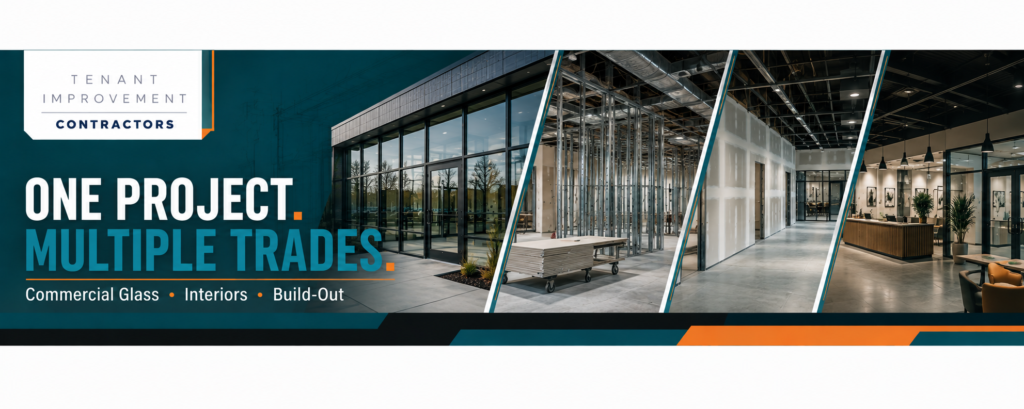
Whatever type of tenant improvement you’re planning, a commercial space still takes a general contractor, an architect, and specialty trades coordinating on one schedule and one budget.
Project Classification
We identify your project's type and scope during the initial walkthrough, before pricing begins.
Specialized Trades
From restaurant kitchens to medical suites, we bring the right specialty trades to each TI type.
Code & Permitting
Different TI types trigger different code and permitting requirements — we manage that complexity.
Documented Closeout
Every project type closes out with the inspections, warranties and documentation it specifically requires.
Bay Area Tenant Improvement Coverage
Tenant Improvement Licensed Contractors serves commercial clients throughout the San Francisco Bay Area — from San Francisco and Oakland to San Jose, the Peninsula, the East Bay and the North Bay.
Types of Tenant Improvement FAQs
Talk to a Contractor About Your Type of Tenant Improvement
Licensed commercial general contractor serving tenant improvement and build-out projects across the San Francisco Bay Area.
Popular Service Areas
© 2026 Tenant Improvement Licensed Contractors. All rights reserved.