Raleigh, NC General Contractor | Commercial Build-Outs
Raleigh, North Carolina
Licensed commercial general contractor delivering office, biotech, and hospitality build-outs across Downtown Raleigh, Glenwood South, and the Research Triangle corridor.
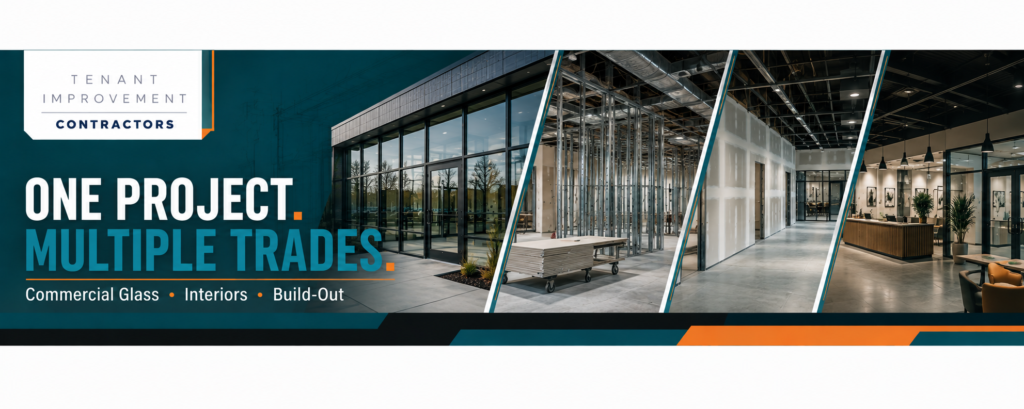
Raleigh serves as both the capital of North Carolina and one of the anchor cities of the nationally significant Research Triangle region, combining state government operations, a major research university, and a rapidly growing biotechnology and life sciences sector into one of the most dynamic mid-sized commercial construction markets in the Southeast. This diversity has generated sustained demand for commercial construction across nearly every property type.
Downtown Raleigh has undergone substantial revitalization in recent years, with the Fayetteville Street corridor and the historic Warehouse District now hosting a vibrant mix of restaurants, entertainment venues, and creative office space that continues to draw investment throughout the urban core. This transformation has generated strong demand for adaptive reuse and modern office build-out work.
Raleigh’s proximity to Research Triangle Park and its status as home to North Carolina State University have made the city an important hub for biotechnology, pharmaceutical research, and technology companies, generating specialized demand for laboratory and research facility construction that complements the city’s traditional government and professional office markets.
Our team has completed commercial build-outs and renovations throughout Raleigh for years, working directly with the city’s permitting departments and the specialized trades that both historic downtown renovation and modern laboratory facility construction require. Whether the project is a biotech lab build-out or a restaurant renovation in Glenwood South, we bring the specific local expertise needed to deliver it successfully.
Raleigh’s role as North Carolina’s state capital adds a layer of government and civic institutional construction demand not found in many comparably sized Southeastern cities, from state office renovations to facilities serving the broader public sector.
The city’s continued population growth, driven significantly by its research university, biotechnology sector, and quality of life, has sustained demand for the retail, medical, and service businesses that support this growing residential base.
Raleigh’s designation as part of the broader Research Triangle region gives the city strong regional economic ties to Durham and Chapel Hill, reinforcing its position as a hub for research-driven commercial growth.
Corporate Office & Professional Service Build-Outs
Raleigh’s corporate community, spanning insurance, financial services, technology, and professional services connected to the broader Research Triangle economy, continues to invest in modernizing office space to meet current workplace expectations around collaboration and flexibility.
Office renovations here often involve updating dated finishes, reconfiguring floor plans for more collaborative workspace, and upgrading technology infrastructure to support hybrid work arrangements increasingly common across the corporate sector.
We work directly with corporate facilities teams and property management to deliver renovations that modernize the workspace while managing the budget and schedule discipline that larger corporate projects require.
This talent competition has pushed many Raleigh employers to accelerate office renovation timelines that might otherwise have been deferred for several more years.
- Open floor plan reconfiguration
- Hybrid workplace technology infrastructure
- Employee amenity and wellness area build-outs
- Corporate branding integration
Our project managers serve as the single point of contact between tenants and building management throughout these projects, streamlining communication and reducing the coordination burden on office staff.
For financial services and professional service tenants with confidentiality requirements, we implement secure access protocols throughout construction.
The finished result is a modernized office environment that supports today’s workplace expectations while respecting the operational realities of Raleigh’s downtown office towers.
Raleigh’s corporate community continues to invest in modernizing office space to attract and retain talent in an increasingly competitive regional labor market.
State Government & Institutional Facility Renovations
As North Carolina’s state capital, Raleigh hosts substantial state government office and institutional facility operations, generating ongoing demand for office renovation and modernization work distinct from the private commercial market found in most other Southeastern cities.
Government facility renovations often involve specific procurement and compliance requirements distinct from private commercial construction, along with security and accessibility standards that public buildings must meet.
We bring experience navigating government procurement processes and public building requirements, understanding both the technical construction standards and the administrative processes that government facility projects require.
This government presence gives Raleigh’s commercial construction market a stability not found in many comparably sized Southeastern cities.
- Government procurement process navigation
- Public building security and accessibility standards
- State office modernization
- Institutional facility compliance
These government projects often involve extended approval timelines compared to private commercial work, and we build appropriate schedule expectations into our planning from the outset.
Our experience with Raleigh’s specific government and institutional facility requirements has given us a strong understanding of how to navigate this specialized construction sector.
As Raleigh continues to invest in modernizing its government facilities, this specialized experience remains valuable for institutional clients throughout the capital.
Raleigh’s role as North Carolina’s state capital continues to generate steady government facility renovation demand independent of broader private commercial construction cycles.
Downtown & Glenwood South Restaurant Build-Outs
Downtown Raleigh’s Fayetteville Street corridor and the Glenwood South entertainment district have become the city’s most active restaurant, bar, and nightlife destinations, drawing new culinary concepts that benefit from steady foot traffic and a strong dining reputation throughout the region.
Restaurant build-outs in these districts require careful coordination of commercial kitchen equipment, grease trap and hood systems, and health department requirements layered on top of standard commercial construction codes.
We maintain working relationships with the specialty subcontractors that food and beverage build-outs require, including hood and suppression system installers and grease interceptor specialists, allowing us to sequence this work efficiently.
This revitalization has attracted comparisons to similar downtown transformations in other mid-sized Southeastern cities undergoing parallel growth.
- Commercial kitchen and hood system installation
- Bar and nightlife venue infrastructure
- Health department and fire marshal coordination
- Historic Warehouse District building integration
Restaurant and bar tenants throughout downtown Raleigh typically operate under firm opening-date commitments tied to lease terms and marketing plans, and we structure our scheduling specifically to protect these critical dates.
Our experience with downtown Raleigh’s specific hospitality industry needs has made us a trusted build-out partner for both established restaurant groups and first-time entrepreneurs.
Raleigh’s competitive dining environment rewards operators who can open quickly without sacrificing quality, and that balance is exactly what our build-out process is designed to deliver.
Downtown Raleigh’s continued revitalization ensures that restaurant and hospitality construction along Fayetteville Street and Glenwood South will remain an active part of the city’s commercial market.
Biotechnology & Life Sciences Laboratory Build-Outs
Raleigh’s proximity to Research Triangle Park and its concentration of biotechnology and pharmaceutical companies has generated significant demand for specialized laboratory and research facility construction found in relatively few other Southeastern markets.
Laboratory build-outs typically require dedicated exhaust and fume hood systems, specialized gas and chemical delivery infrastructure, backup power systems for sensitive equipment and sample storage, and cleanroom-rated finishes in certain research areas.
We work closely with laboratory equipment vendors, mechanical engineers specializing in lab ventilation, and the life sciences tenants themselves throughout design and construction, ensuring that infrastructure placement aligns exactly with planned equipment layouts.
This continued growth has made Raleigh one of the most closely watched life sciences submarkets in the entire Southeast.
- Fume hood and specialized exhaust systems
- Vibration-sensitive equipment platforms
- Cleanroom-rated finishes and controls
- Backup power for sample and equipment protection
Because life science tenants often operate on tight timelines tied to funding rounds or lease commencement dates, we structure our scheduling to protect critical path milestones like long-lead mechanical equipment delivery and inspection sign-off.
Our familiarity with the specific requirements of laboratory occupancies helps life science tenants avoid the permitting delays that can otherwise push back a planned research program start date.
As Raleigh’s life sciences sector continues to grow alongside the broader Research Triangle region, having a contractor experienced specifically in laboratory construction has become an important advantage for companies competing for research capacity.
Raleigh’s continued growth as a biotechnology and life sciences hub reinforces sustained demand for specialized laboratory facility construction throughout the city and surrounding Research Triangle region.
Tenant Improvements for Lease Turnover
Commercial property owners throughout Raleigh regularly need tenant improvement work completed quickly between lease turnovers, particularly within the city’s many multi-tenant downtown towers and Warehouse District mixed-use buildings. Minimizing vacancy time between tenants directly protects a property owner’s rental income and overall return on investment.
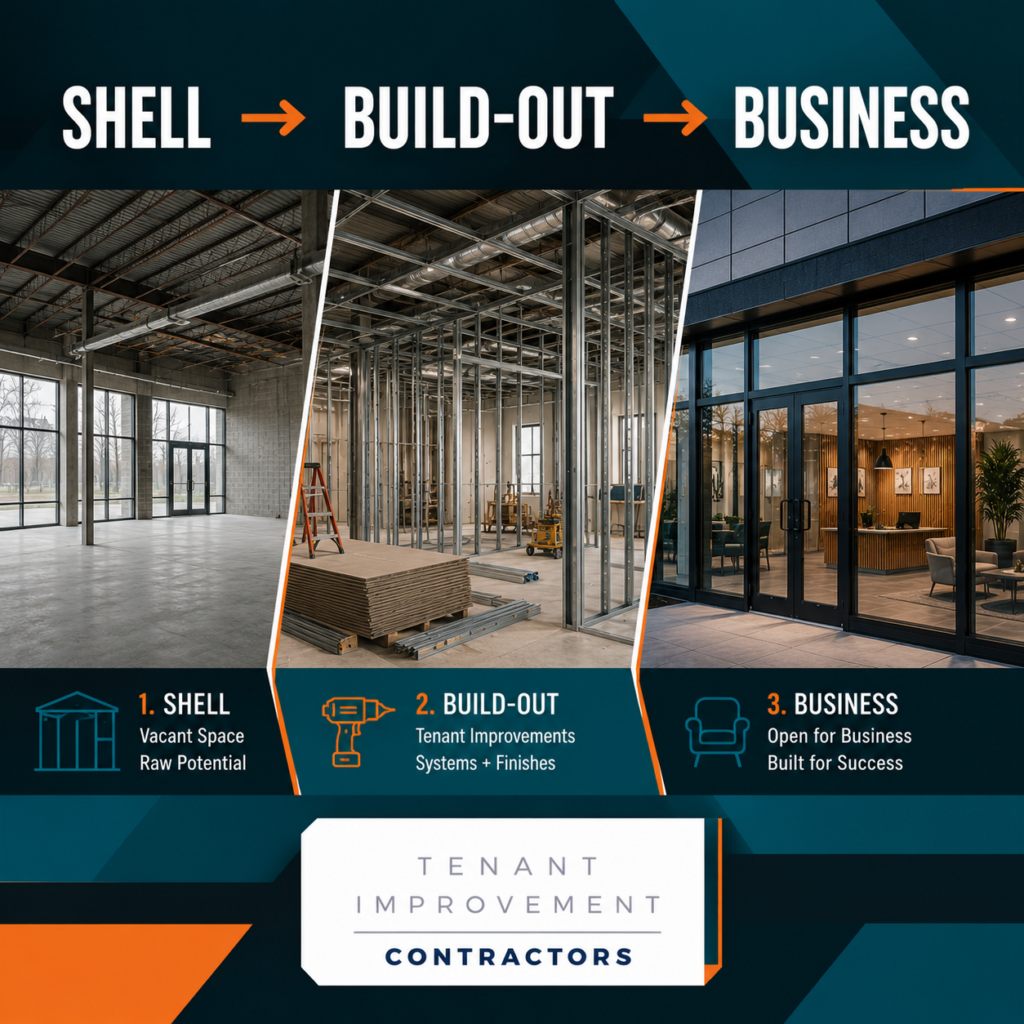
Tenant improvement scopes vary widely depending on the incoming tenant’s business type, ranging from simple paint-and-carpet refreshes to complete demolition and rebuild of interior partitions, mechanical systems, and finishes tailored to a new tenant’s specific requirements.
We work directly with property owners, leasing brokers, and incoming tenants to scope tenant improvement projects accurately during lease negotiations, helping all parties understand the construction timeline and cost implications before a lease is finalized.
This demand has made efficient turnover capability a genuine competitive advantage for contractors serving Raleigh’s institutional property management firms.
- Rapid turnover scoping and estimating
- Historic and modern building infrastructure integration
- Tenant-specific mechanical and finish upgrades
- Landlord and broker coordination during lease-up
Fast, accurate tenant improvement estimating during lease negotiations helps property owners close deals more confidently, since incoming tenants can see a clear construction timeline and budget before signing.
Our established relationships with Raleigh-area subcontractors allow us to move quickly once a lease is signed, often compressing tenant improvement timelines that might otherwise stretch on longer with less experienced contractors.
For property owners managing multiple Raleigh assets, we serve as a consistent tenant improvement partner across their portfolio, streamlining the improvement process on every unit turnover.
Property owners managing multi-tenant Raleigh buildings increasingly value contractors who can turn over tenant improvements quickly, since minimizing vacancy periods has a direct and measurable impact on overall property performance.
University-Adjacent & Research Facility Build-Outs
Raleigh’s status as home to North Carolina State University generates demand for university-adjacent commercial construction, from research partnerships and startup incubator space to retail and hospitality serving the university’s substantial student and faculty population.
These projects often require flexible research and collaboration space, technology infrastructure supporting academic-industry partnerships, and retail infrastructure serving a distinct university-area customer base.
We work with university-affiliated tenants and property owners to deliver build-outs that serve this unique combination of research, education, and community-oriented commercial needs.
This research growth has attracted additional private investment in facilities serving the university-industry partnership pipeline.
- University-industry partnership research space
- Startup incubator and collaboration facilities
- University-area retail and hospitality build-outs
- Academic-adjacent technology infrastructure
These university-adjacent projects often operate around the academic calendar, and we plan construction sequencing to work efficiently within this specific scheduling context.
Our experience with Raleigh’s university-adjacent commercial market has given us practical understanding of how to serve this distinct tenant base effectively.
As North Carolina State University continues to grow its research partnerships, this specialized commercial construction segment remains an important part of Raleigh’s overall market.
North Carolina State University’s continued growth in research partnerships reinforces demand for university-adjacent commercial construction throughout Raleigh.
Medical & Healthcare Facility Build-Outs
Raleigh’s growing population and status as a regional healthcare hub continue to support demand for medical office and specialty clinical practices throughout the city and surrounding Wake County.
Medical build-outs in Raleigh typically involve specialized plumbing for exam rooms and procedure areas, dedicated electrical circuits for diagnostic equipment, and ADA-compliant layouts throughout patient-facing spaces.
We work closely with medical practices throughout the planning and permitting phases to ensure electrical, plumbing, and mechanical rough-in locations align precisely with planned equipment layouts.
This healthcare expansion mirrors broader regional trends toward extending care access closer to where patients actually live.
- Exam room and procedure area build-outs
- Diagnostic equipment electrical and structural support
- ADA-compliant patient area layouts
- Medical equipment vendor coordination
Because many practices continue treating patients in adjacent suites during construction, we place particular emphasis on dust containment, noise scheduling, and clearly defined access paths that keep the clinical environment safe throughout the build.
Our familiarity with Raleigh’s specific inspection expectations helps healthcare tenants move through permitting and final occupancy inspections without unnecessary delays.
As Raleigh’s population continues to grow, sustained investment in medical facility construction is likely to remain an important part of the city’s overall commercial construction market.
Raleigh’s healthcare sector continues to expand access to serve the city’s growing population, sustaining demand for medical facility construction.
Historic Warehouse District Adaptive Reuse
Raleigh’s historic Warehouse District contains a significant collection of early twentieth-century industrial and commercial buildings, many converted into creative office, retail, and restaurant space that preserves the distinctive architectural character of the original structures.
These conversion projects require careful structural evaluation, since original heavy-timber and masonry construction presents different load-bearing characteristics and code compliance considerations than modern buildings.
We work with architects and structural engineers experienced in adaptive reuse to evaluate these buildings thoroughly before construction begins, identifying the structural, mechanical, and life-safety upgrades needed while preserving the district’s historic character.
This popularity has, in turn, encouraged additional private investment in Raleigh’s remaining inventory of underutilized historic buildings.
- Heavy-timber and masonry structural evaluation
- Historic facade preservation
- Modern mechanical and life-safety system integration
- Creative office and restaurant infrastructure
These conversion projects often reveal unexpected conditions once construction begins, and we build appropriate contingency planning into every Warehouse District renovation budget and schedule.
Our experience with the Warehouse District’s specific inventory of historic buildings has given us practical, field-tested solutions for common challenges these renovations present.
A well-executed Warehouse District renovation preserves the architectural character that makes this area one of Raleigh’s most distinctive commercial destinations.
The Warehouse District’s continued popularity as a creative office and hospitality destination has made adaptive reuse an increasingly important segment of Raleigh’s construction market.
Preparing San Diego Commercial Buildings For Future Occupancy
Many owners use tenant improvements to prepare commercial properties for changing business needs, future tenants, and evolving workplace expectations.
Future-focused improvements often include:
- Flexible floor plans
- Technology infrastructure
- Building automation systems
- Electrical capacity upgrades
- HVAC modernization
- Sustainable building improvements
- Accessibility enhancements
- Long-term capital improvement planning
Preparing San Diego commercial buildings before the next tenant improvement helps improve leasing flexibility, operational efficiency, tenant satisfaction, and long-term asset value.
Frequently Asked Questions
Below are answers to some of the questions we hear most often from property owners, tenants, and business operators planning a commercial construction project in Raleigh, North Carolina.
This diversification has proven to be a genuine strength during periods when any single sector faces broader economic headwinds.
- Licensed & insured North Carolina contractor
- City of Raleigh permitting expertise
- Biotech laboratory construction specialists
- Transparent, milestone-based pricing
How long does a typical commercial build-out take in Raleigh?
Timelines vary based on project scope, but a standard office or retail build-out typically takes eight to twelve weeks from permit issuance to substantial completion, while laboratory and historic renovation projects can take three to five months given their more complex requirements. We provide a detailed schedule during the proposal phase.
Do you handle City of Raleigh permitting on our behalf?
Yes. We manage the entire permitting process for our Raleigh projects, including plan submission, responding to plan review comments, and scheduling every required inspection through final certificate of occupancy.
Can you build out laboratory space for a biotech company?
Yes, we have specific experience delivering laboratory build-outs for biotechnology and life sciences companies throughout the Raleigh and Research Triangle region, including specialized ventilation and regulatory-compliant environments.
Do you work on state government facility projects?
Yes, we have experience navigating government procurement processes and public building requirements for state office and institutional facility renovations in Raleigh.
Can you renovate a Warehouse District building?
Yes, adaptive reuse of Raleigh’s historic Warehouse District buildings is one of our areas of expertise, including the structural evaluation and code-compliance upgrades these conversions typically require.
What does a commercial build-out typically cost in Raleigh?
Costs depend heavily on the scope of work, building condition, and finish level required, with laboratory and historic renovation projects generally costing more than standard build-outs. We provide a detailed, itemized estimate after an initial walkthrough.
Do you work with restaurants in Glenwood South?
Yes, we have specific experience with the commercial kitchen, hood system, and licensing coordination that Glenwood South’s competitive restaurant and nightlife scene requires.
Are you licensed to work throughout Raleigh and Wake County?
Yes, we hold the required North Carolina contractor licensing and maintain full liability insurance for commercial construction work throughout Raleigh and the surrounding Wake County area.
Raleigh’s combination of government, research, and corporate demand gives the city one of the most diversified commercial construction markets in the entire Southeast.
Why Property Owners Choose Us in Raleigh
Property owners and tenants throughout Raleigh choose our team because we combine genuine local construction experience with the technical expertise needed to navigate both specialized laboratory construction and historic Warehouse District renovation work. We understand the specific code and permitting realities of building in Raleigh, and we apply that knowledge to every project from the first planning conversation.
Our licensing, insurance, and safety practices meet the standards required for commercial work throughout Raleigh and the surrounding Wake County area, giving property owners confidence that their project is being handled by a fully qualified, accountable contractor.
We maintain transparent, milestone-based pricing throughout every project, giving clients clear visibility into costs and progress rather than open-ended billing that leaves budget outcomes uncertain until the very end of construction.
Above all, we understand that a commercial construction project represents a significant business decision for the property owners, companies, and institutions we work with, and we approach every project with the communication and reliability that decision deserves.
Our subcontractor relationships throughout Raleigh and the broader Research Triangle region, built over years of consistent local work, allow us to staff specialized trades efficiently even during periods of high regional construction demand.
We also carry the specific insurance coverage and bonding capacity that larger institutional and biotech clients in the Raleigh market often require before awarding a construction contract.
Explore More Service Areas
Our commercial construction and build-out services extend throughout North Carolina and into other major markets, with dedicated teams supporting the following locations.
- North Carolina General Contractor Services
- Cary, NC Commercial Build-Outs
- Long Island City, NY Commercial Build-Outs
- Brooklyn, NY Commercial Build-Outs
- Astoria, NY Commercial Build-Outs
- Secaucus, NJ Commercial Build-Outs
- Omaha, NE Commercial Build-Outs
- Kansas City, MO Commercial Build-Outs
- Independence, MO Commercial Build-Outs
- Minneapolis, MN Commercial Build-Outs
Ready to Build in Raleigh?
Licensed commercial general contractor serving tenant improvement and build-out projects across the San Francisco Bay Area.
Popular Service Areas
© 2026 Tenant Improvement Licensed Contractors. All rights reserved.